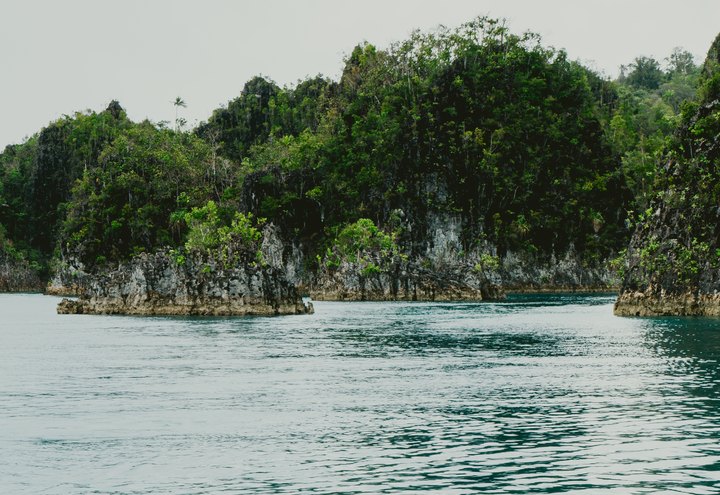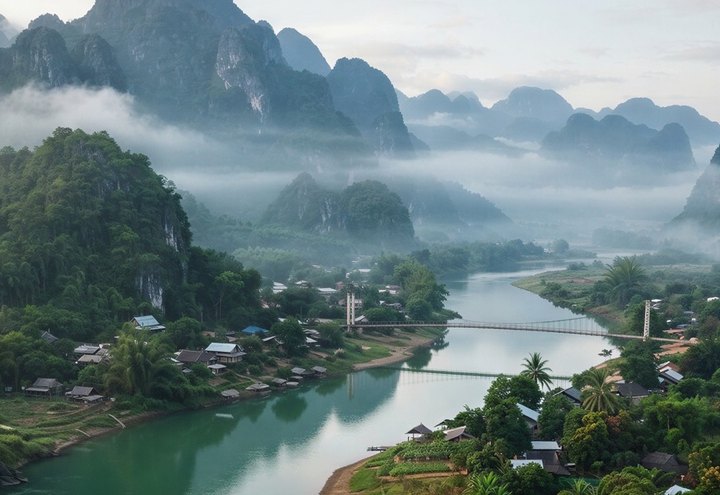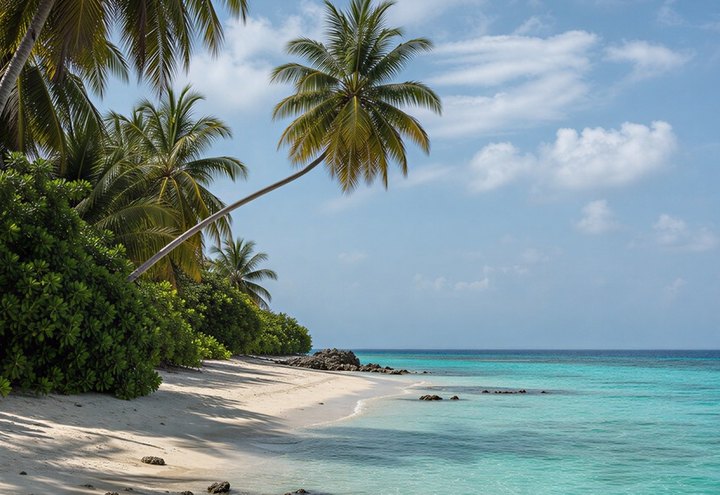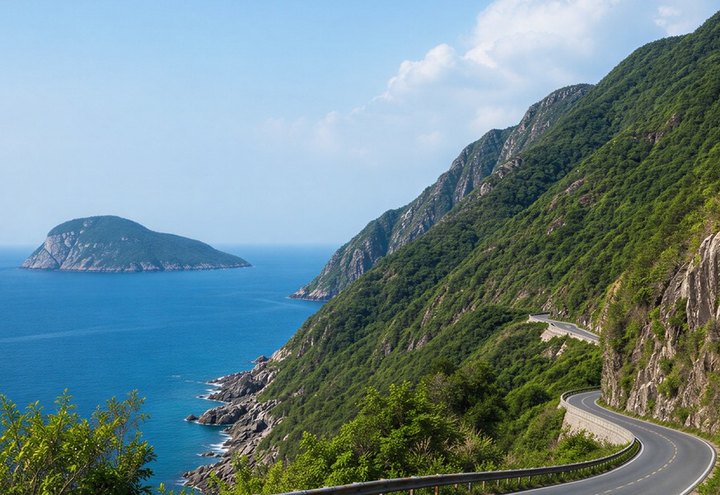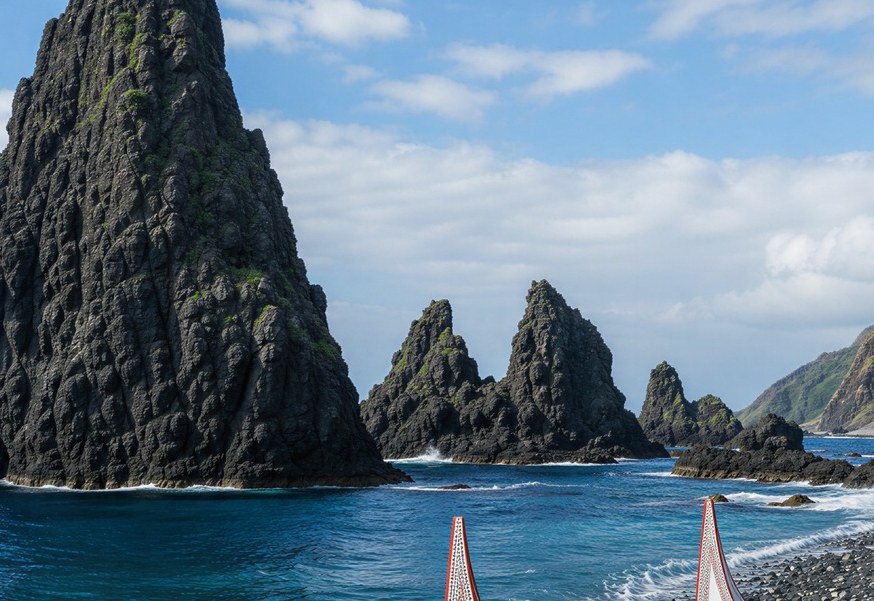
Lanyu sits about sixty kilometres off Taiwan's southeast coast, and a single road runs the roughly thirty-seven kilometres around its edge. Its people are Tao, culturally and linguistically closer to the Philippines than to the Taiwanese mainland, and their painted tatala canoes are still built by hand and still used. Flying fish season, running roughly from spring into early summer, remains the axis the island's year turns on, with its own rules about who may fish, when, and with what.
Getting there is the reason it stays quiet. Ferries cross from Houbihu near Kenting and from Fugang near Taitung, and both are at the mercy of the Pacific swell; small aircraft fly from Taitung when the weather allows. Visitors are asked not to photograph people or boats without asking, which is a straightforward courtesy that the island states clearly and often. A long-running dispute over the nuclear waste facility stored on the island's southern tip is part of the place too, and the community has never been quiet about it.
Lanyu leads a group of ten islands this desk considers materially under-visited relative to what they hold. The others:
- Batanes, Philippines - stone houses, Pacific weather, and flights that go when they go
- Banda Neira, Indonesia - the original nutmeg islands, reached by irregular ferry from Ambon
- Atauro, Timor-Leste - reefs with exceptionally high recorded fish diversity, an hour or so from Dili
- Ulleungdo, South Korea - volcanic cliffs and squid boats in the East Sea
- Iriomote, Japan - mangrove rivers and dense subtropical forest at the far end of the Yaeyamas
- Con Dao, Vietnam - a national park archipelago with a heavy prison history
- Sumba, Indonesia - megalithic tombs, ikat weaving and long empty southern beaches
- Thoddoo, Maldives - a farming island rather than a resort island
- Jaco, Timor-Leste - uninhabited, locally sacred, and no one stays the night
How the group holds together
What links them is not remoteness for its own sake. Each has a working population that predates tourism, an arrival route that limits volume by physics rather than by policy, and lodging owned by people who live there. Several are seasonal to the point of being closed by weather for months.
Ferry schedules on most of these routes are published locally and change without notice, so the practical advice is to build slack into the return leg rather than the outward one. Islands like these punish tight connections, and reward the traveller who has left a spare day at the end.