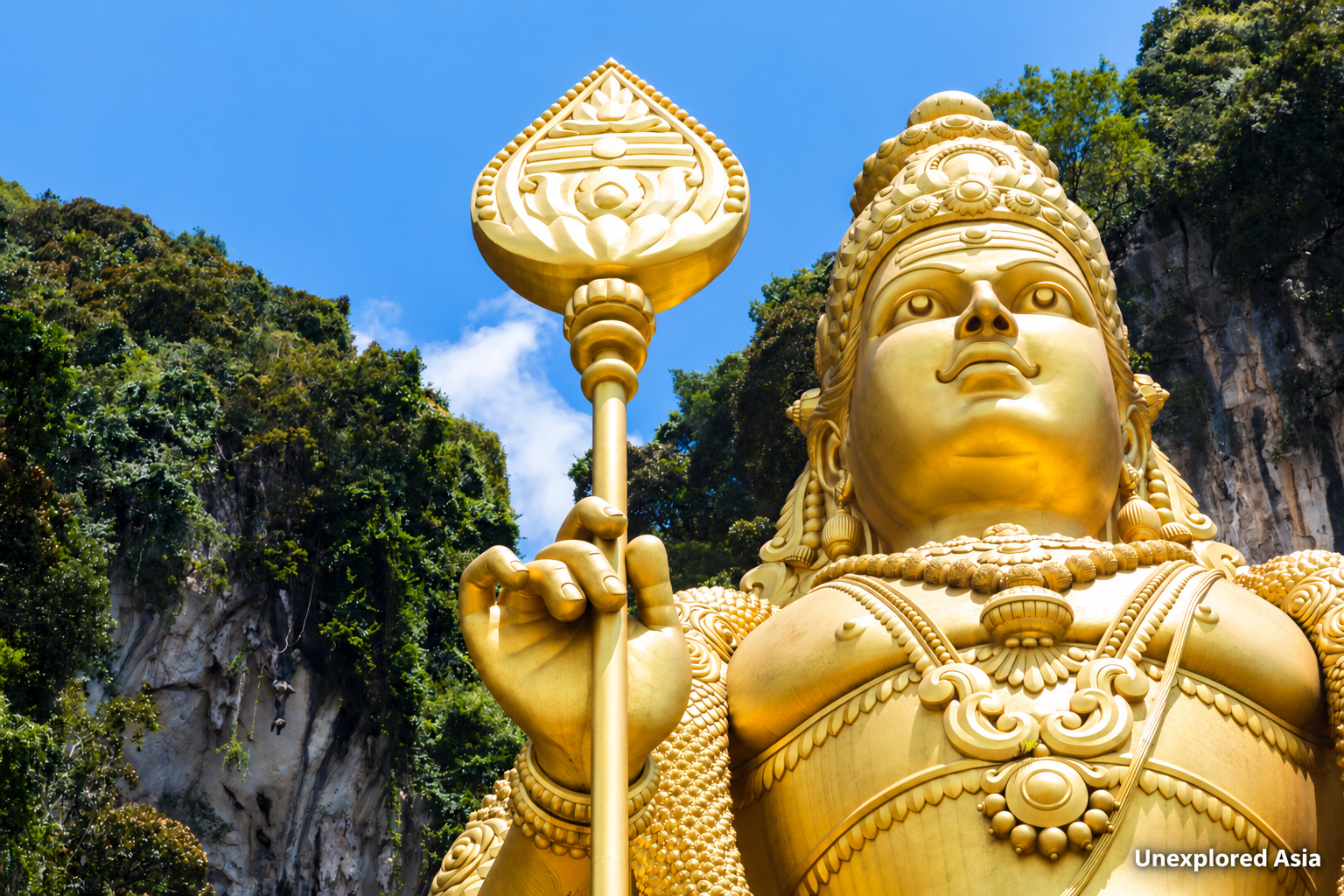
Batu Caves is one of the most rewarding cultural outings from Kuala Lumpur. A monumental golden statue of Lord Murugan stands at the foot of a limestone hill, beside a staircase of 272 brightly coloured steps leading to Hindu shrines inside the caverns. The combination of living faith, natural geology and bold visual scale makes the site instantly memorable.
Although many travellers come for the famous view, Batu Caves is first and foremost a sacred place. Visit with the same consideration you would bring to any active temple: dress respectfully, give worshippers space and allow enough time to appreciate the caves beyond the entrance photograph.
Lord Murugan and the meaning of the statue
Lord Murugan is a widely revered Hindu deity associated with courage, wisdom and victory. The approximately 43-metre (140-foot) statue at Batu Caves was unveiled in 2006 and forms a powerful gateway to the temple complex. Its golden surface catches the changing light, while the limestone cliff behind it creates a natural frame.
The statue’s ceremonial spear, or vel, is closely linked with Murugan and the triumph of wisdom over adversity. Understanding that symbolism turns the landmark from a striking backdrop into an introduction to the devotion at the heart of the site.
Climbing the 272 steps
The colourful staircase rises directly beside the statue. Take it at a comfortable pace, use the handrail when needed and pause at the landings for views back toward the city. Morning generally brings cooler conditions and fewer visitors, which makes the climb more comfortable and photography easier.
At the top, the vast Cathedral Cave—also known as Temple Cave—opens beneath a high limestone ceiling. Shafts of daylight, temple structures and the natural rock create an atmosphere very different from the busy forecourt below. Surfaces can be damp, so shoes with grip are preferable.
Getting to Batu Caves from Kuala Lumpur
The KTM Komuter train is usually the simplest independent option. Services run from central Kuala Lumpur to Batu Caves station, a short walk from the temple entrance. Check the current KTM timetable before departure, as intervals may vary by day.
Ride-hailing and taxis offer a convenient alternative, especially for families or small groups. Batu Caves lies roughly 13 kilometres north of central Kuala Lumpur; journey time depends heavily on traffic. If arriving by car, an early start helps avoid the busiest period.
What to know before you visit
| Best time | Early morning for cooler temperatures, softer light and a quieter climb. |
|---|---|
| Main cave | Access to the principal temple cave is generally free; separate nearby attractions may charge. |
| What to wear | Cover shoulders and knees. Bring a light layer or sarong if needed. |
| Footwear | Choose secure shoes for 272 steps and occasionally damp surfaces. |
| Time needed | Allow two to three hours for an unhurried visit. |
Macaques live around the steps. Admire them from a distance, keep food out of sight and hold loose belongings securely. Never feed or touch wildlife. Carry drinking water, but keep the temple grounds clean and use designated bins.
Visiting during Thaipusam
Thaipusam transforms Batu Caves into a major pilgrimage destination. Devotees undertake acts of prayer and carry offerings, and the atmosphere is intense, colourful and deeply spiritual. It can be an extraordinary cultural experience, but it also brings very large crowds, transport changes and heat.
If attending, observe from the edges of processional routes, avoid blocking devotees and ask before taking close portraits. Travellers seeking a quiet first visit will be better served by an ordinary weekday morning.
How to photograph Batu Caves respectfully
A wide frame from the forecourt captures the relationship between the Murugan statue, staircase and limestone cliff. Later, use the landings for elevated views and look for natural light inside the main cavern. Avoid posing in front of active worship, stepping across offerings or treating shrines as props.
The strongest images communicate place as well as scale. Including a small human figure can show the statue’s height, while a vertical composition suits the upward sweep of the steps.
Watch the original Unexplored Asia reel
See the golden statue and Batu Caves setting in our original Instagram feature:
View this post on Instagram
Plan with current official information
Transport, access and festival arrangements can change. Confirm details through Tourism Malaysia’s Batu Caves guide and the latest KTM schedule. With an early start and considerate approach, Batu Caves offers a meaningful introduction to Malaysia’s Hindu heritage and one of the country’s most dramatic cultural landscapes.