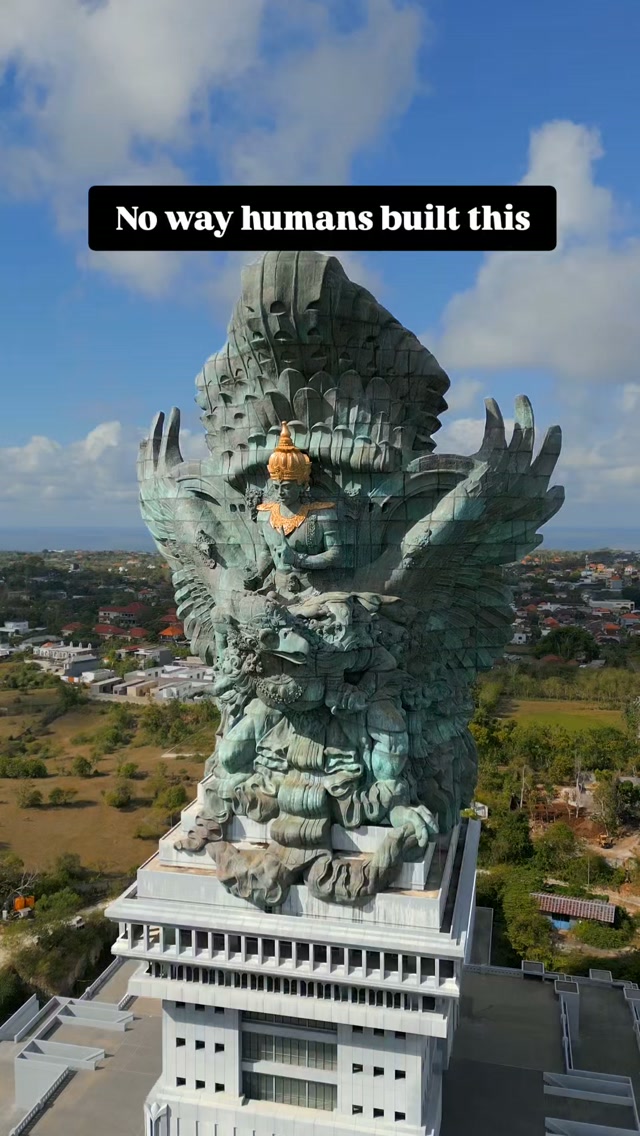
Rising above the limestone landscape of southern Bali, Garuda Wisnu Kencana is a landmark designed to be seen from afar. The monumental work depicts the Hindu god Vishnu riding Garuda, the mythical bird associated with courage, loyalty and protection. Up close, its scale is matched by intricate surfaces and a powerful sense of movement.
The story expressed by the GWK statue
The sculpture draws on a central figure in Hindu tradition and on Garuda, Indonesia’s national emblem. Their pairing gives the monument deep cultural resonance while its contemporary construction shows what modern Indonesian art and engineering can achieve.
Indonesia’s official tourism website places the completed monument at more than 120 metres high and 64 metres wide. The immense wings and layered copper-toned surface make it impressive from many angles, especially as the changing Bali light moves across the structure.
More than a single landmark
Garuda Wisnu Kencana Cultural Park surrounds the statue with broad plazas, sculpted limestone cliffs and venues for performances. Traditional dance and music can add another layer to a visit, connecting the monumental centrepiece with living Balinese culture.
The park lies in Ungasan, within convenient reach of several areas in southern Bali. Setting aside a few hours gives visitors time to appreciate both the statue and the wider grounds without rushing.
Why GWK stands out among Bali landmarks
Bali is celebrated for ancient temples and natural beauty, but GWK offers a bold modern expression of the island’s cultural identity. Its combination of mythology, artistry and extraordinary scale makes it a memorable addition to a Bali itinerary.
Watch the GWK Bali reel on Instagram
Watch the original reel from @unexploredasia on Instagram.