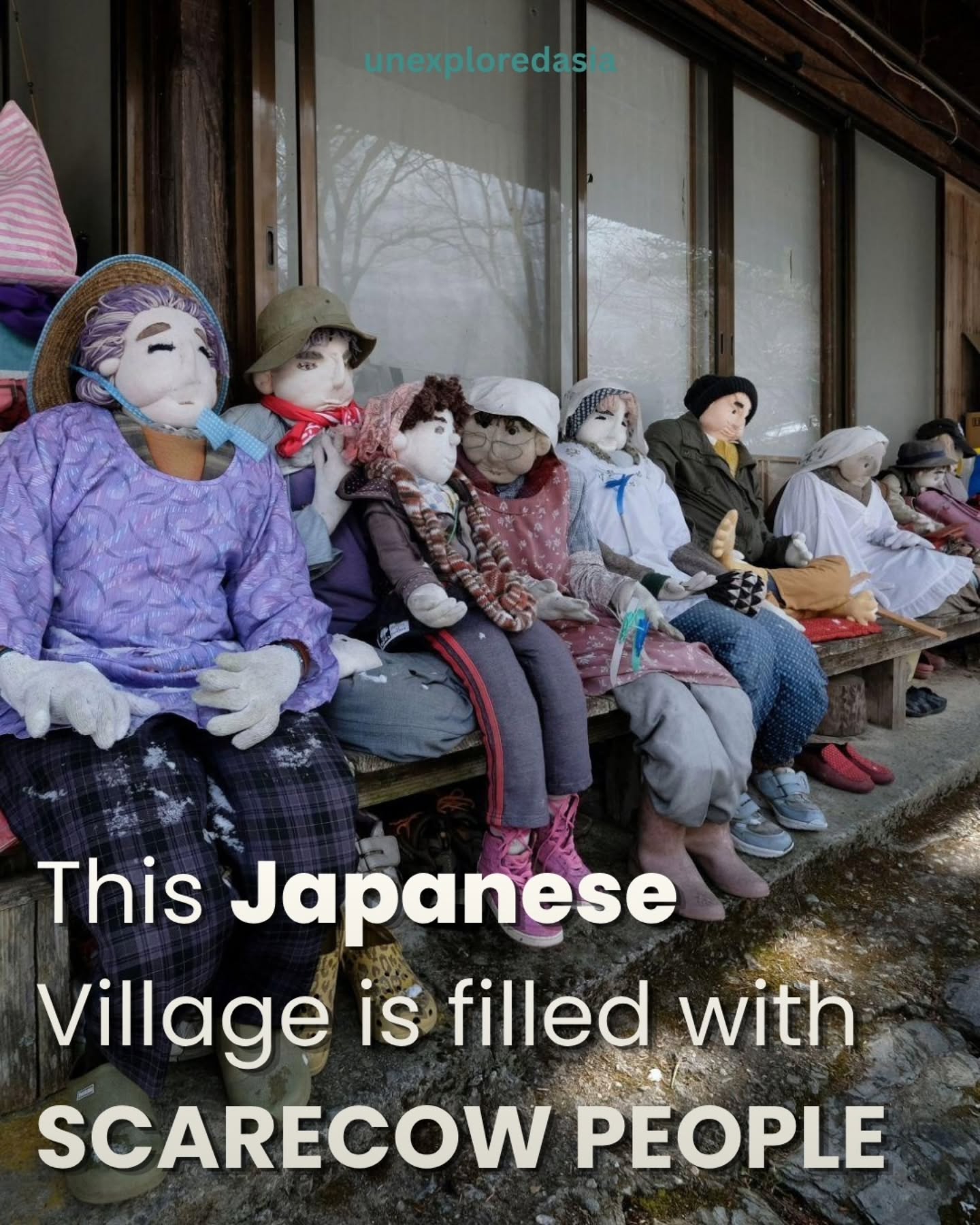
Nagoro is a small mountain village with an unforgettable form of public art. Along roads, in fields, at bus stops and inside the former school, handmade figures appear to continue the rhythms of everyday life. Their expressive faces and carefully chosen clothing turn a quiet corner of Tokushima into a warm, imaginative open-air gallery.
How Nagoro became the Scarecrow Village
The project began with local artist Ayano Tsukimi. After returning to her hometown and seeing its population grow smaller, she started creating figures that recalled former residents and familiar characters. What began with one scarecrow gradually became a thoughtful portrait of village life.
Japan’s national tourism organisation says more than 350 handcrafted characters now share Nagoro with its small human community. Some work in fields, others wait for transport, gather in classrooms or sit together as if in conversation. Their placement gives every turn through the village a gentle sense of discovery.
Art, community and the Iya Valley
The figures are striking, but the story behind them is what makes Nagoro especially meaningful. They preserve memories, celebrate creativity and draw visitors towards a rural community that might otherwise be overlooked. The result feels less like a conventional attraction and more like an evolving community artwork.
Nagoro also sits within the scenic Iya Valley, an area of forested mountains, deep river valleys and traditional settlements. Travellers can combine the village with the wider landscapes of western Tokushima, giving the journey as much importance as the destination.
Visiting with curiosity and respect
Walk slowly, notice the personalities given to each figure and remember that Nagoro remains a real residential community. With that spirit, the Scarecrow Village becomes an uplifting example of how art can keep stories visible and invite new connections to a remote place.
View the Nagoro post on Instagram
See the original carousel from @unexploredasia on Instagram.