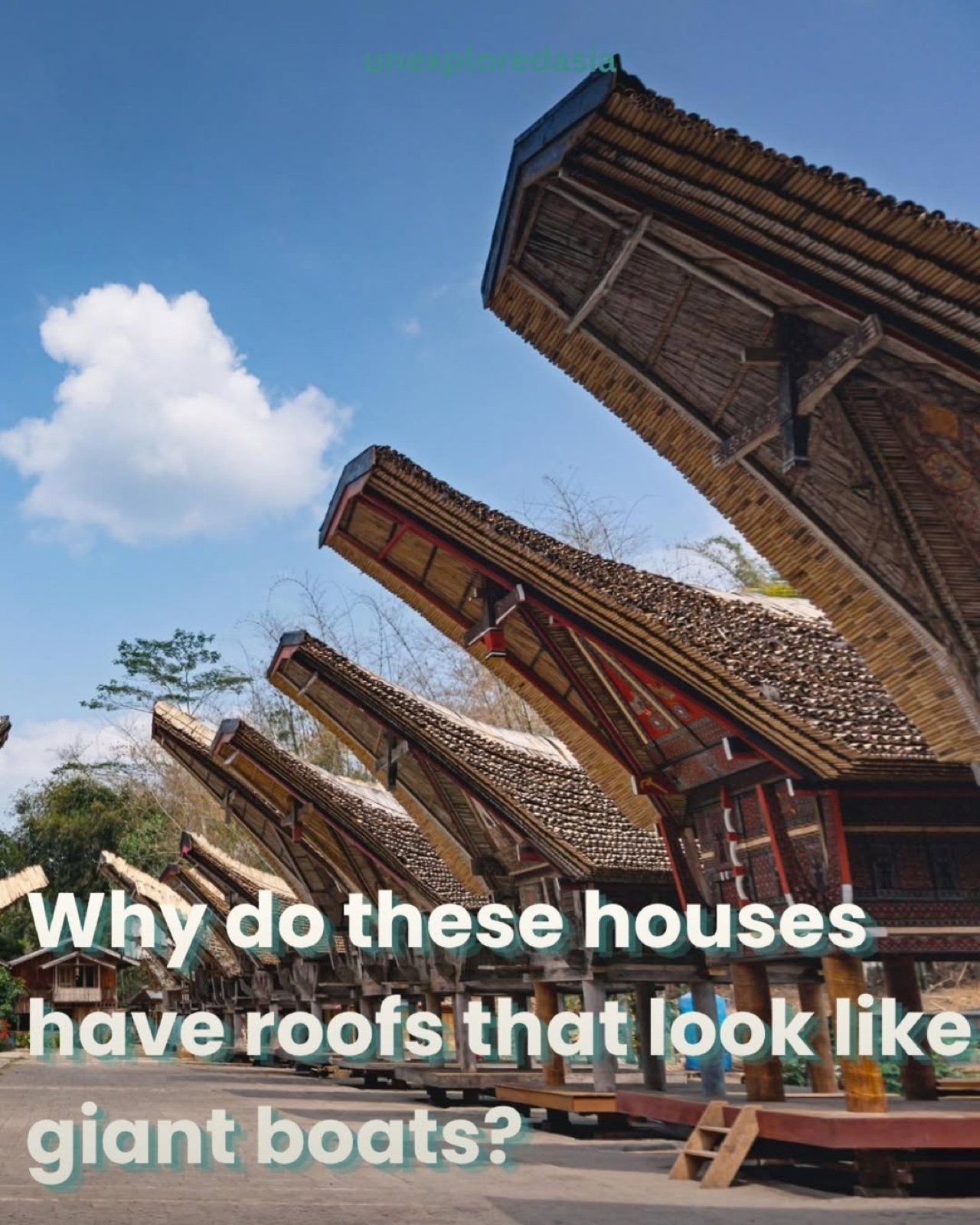
In the highlands of South Sulawesi, rows of steeply curved roofs rise above rice fields and village courtyards. These are Tongkonan, the traditional ancestral houses of the Toraja people. Their silhouette is often compared with an inverted boat or buffalo horns, but a Tongkonan is far more than an unusual building. It links an extended family to its ancestry, shared responsibilities and place within Toraja society.
Travellers can see Tongkonan throughout the area commonly called Tana Toraja, particularly around Rantepao and Makale. The most rewarding visit is not a rushed photo stop: it is an opportunity to understand how architecture, family history, rice cultivation, ceremony and the surrounding landscape fit together.
What is a Tongkonan?
A Tongkonan is an ancestral house belonging to a wider family group. The name is associated with the Toraja word tongkon, meaning to sit or gather. Traditionally, the house acts as a centre for family decisions, customary responsibilities and ceremonies as well as a physical record of lineage.
The dramatic roof is the first detail most visitors notice. Its exact origin is interpreted in different ways. A widely shared explanation connects the form with boats associated with ancestral migration; another visual association is the upward curve of buffalo horns. It is best to treat these as cultural interpretations rather than reducing the design to a single proven story.
Across a traditional compound, Tongkonan houses commonly face a parallel row of smaller rice granaries called alang. The open ground between them supports family gatherings and social life. UNESCO's description of the Tana Toraja Traditional Settlement identifies houses, granaries, ceremonial grounds, burial places, rice fields and buffalo pasture as interconnected parts of the living landscape.
How to read the carvings and buffalo horns
Tongkonan facades are decorated with carved and painted motifs known as pa'ssura. Geometric patterns, animals and plants communicate ideas connected with prosperity, relationships, social values and the natural world. Red, black, yellow and white frequently appear, but meanings can be layered and vary with context. A local guide can explain details without turning them into oversimplified symbols.
Buffalo horns may be displayed vertically on the front of a house. They are connected with ceremonial traditions and can indicate the history and standing of a family. Photograph them respectfully: they are not decorative props added for tourists, but part of a family's cultural record.
Best places to see Tongkonan houses
Ke'te Kesu'
Ke'te Kesu' is the most complete and accessible introduction for many first-time visitors. The traditional compound includes six Tongkonan houses and twelve granaries, while the wider cultural landscape includes ceremonial space and burial sites. Its popularity means it can become busy, so arriving early gives you more time to notice the architectural details.
Pallawa
Pallawa is known for an impressive arrangement of houses and granaries in parallel rows. It offers a clear view of how the structures relate to one another as a compound rather than as isolated buildings. Walk slowly and remain within areas open to visitors.
Nanggala and Buntu Pune
Nanggala preserves a compound with houses, granaries and a communal open space. Buntu Pune is valuable for understanding the relationship between a dwelling compound and its ceremonial ground. Both can add depth to a trip beyond the most frequently photographed village.
How to reach Tana Toraja
Rantepao is the most practical base for exploring the northern Toraja highlands, while Makale serves as the administrative centre farther south. The usual overland route begins in Makassar. Intercity buses, including overnight services, connect Makassar with Rantepao and Makale; journey times are often around eight to ten hours but depend on traffic, road conditions and stops.
Flights between Makassar and Toraja Airport may offer a faster alternative when operating, followed by a road transfer. Schedules can change, so confirm current services before building an itinerary around a flight. Within Toraja, a car with a knowledgeable local driver is the easiest option for combining dispersed villages. Confident riders also use rented motorbikes, though mountain roads, rain and limited lighting demand care.
How many days do you need?
Allow at least three nights in the region. Two full sightseeing days provide time for a traditional village cluster, highland scenery and one or two cultural or burial sites without racing between them. A third full day creates space for walking, crafts or a slower visit with a local guide.
| Day 1 | Arrive in Rantepao or Makale, settle in and visit a nearby viewpoint or market. |
|---|---|
| Day 2 | Explore Ke'te Kesu', Lemo and surrounding rice-field landscapes with a local guide. |
| Day 3 | Travel north to Pallawa, Nanggala or Batutumonga and visit a less-crowded compound. |
Best time to visit Tana Toraja
Toraja's highland climate is cooler than much of lowland Sulawesi, but rain is possible throughout the year. The relatively drier middle months are popular for overland travel and walking, while greener, wetter periods create atmospheric landscapes. Conditions vary, so check a current forecast shortly before departure and carry a light rain layer.
Some ceremonies take place during the drier season, but they are family and community events—not performances scheduled for visitors. Never arrive uninvited or assume access. A responsible local guide can advise whether guests are welcome and explain appropriate behaviour.
Respectful visitor etiquette
- Remember that Tongkonan compounds may be homes and ceremonial spaces, not open-air museums.
- Ask before entering a building, courtyard or family area and before photographing people.
- Follow local guidance at burial and ceremonial sites, and keep your voice low.
- Dress modestly and do not climb onto houses, granaries, stonework or ceremonial structures.
- If invited to a ceremony, ask your guide about greetings, seating and an appropriate contribution.
- Choose local guides, drivers, guesthouses and craftspeople so tourism supports the community preserving this heritage.
Watch the original Unexplored Asia post
The carousel below introduces the architecture, carvings, buffalo horns and rice granaries that make a Toraja compound so distinctive.
View the original Tongkonan post on Instagram
Plan with current information
Transport schedules, entry arrangements and access to living compounds can change. Before travelling, consult the official Indonesia Travel guide to Tana Toraja and confirm local conditions through your accommodation or guide. Approach the region with time and curiosity, and the famous roofs become an entry point into a much richer story of family, place and living heritage.