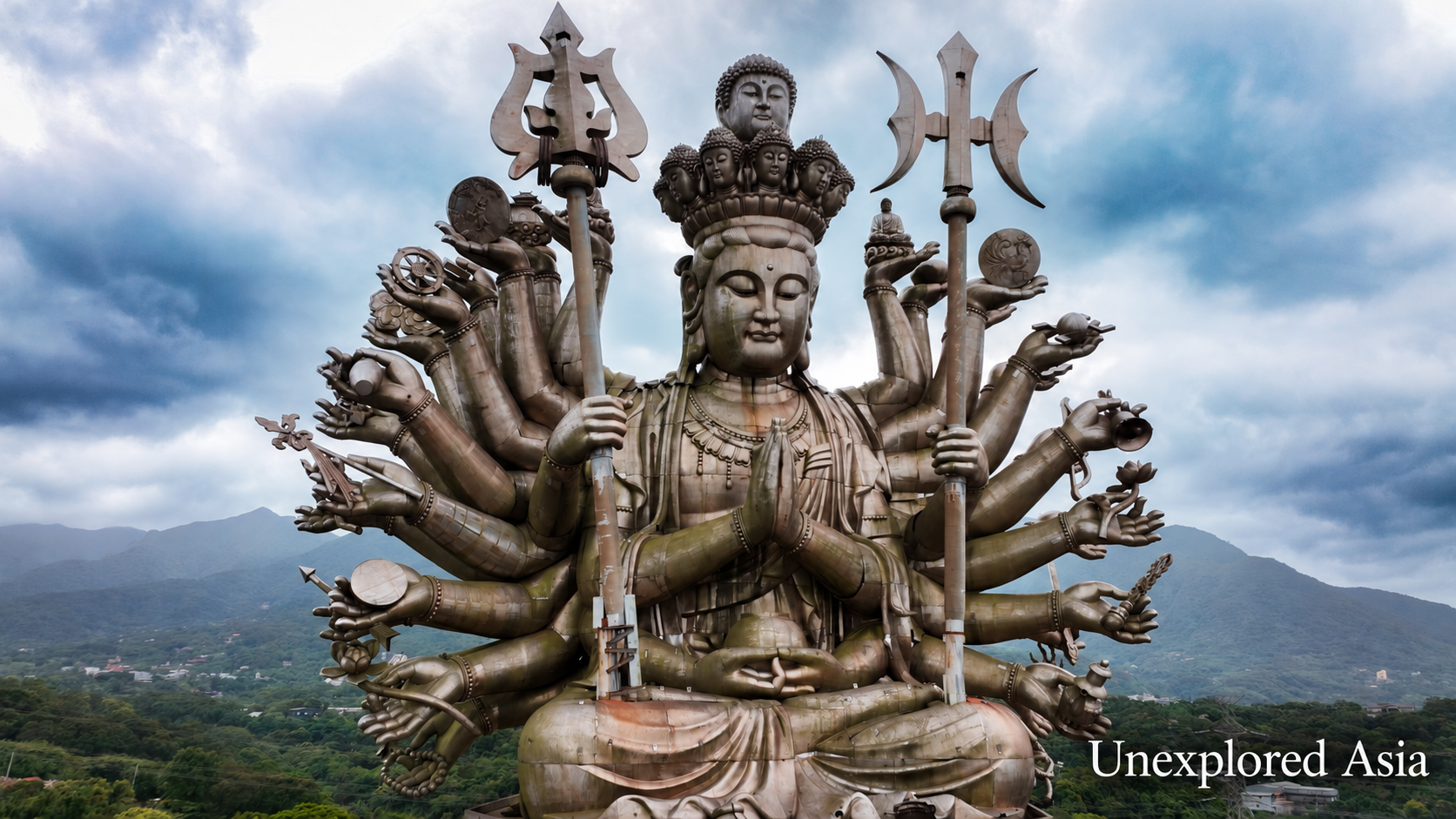
High above the Tamsui landscape in New Taipei City, Yuan-Dao Guanyin Temple brings together monumental Buddhist art, Tang-inspired architecture and broad mountain views. Its defining sight is the towering Thousand-Hand-and-Eye Guanyin: a radiant sculpture whose many hands express an ideal of compassion reaching in every direction, while the eyes represent the wisdom to recognise suffering.
This is more than a dramatic photo stop. It is an active religious setting designed for reflection, and its scale makes the symbolism feel immediate. Visitors who arrive with time to slow down will find landscaped grounds, ornate temple details and a collection of Guanyin images that reward a closer look.
Why the Thousand-Hand Guanyin is special
Guanyin is the bodhisattva associated with compassion in East Asian Buddhism. The “thousand” hands are symbolic rather than a number visitors need to count: they convey limitless capacity to offer help. Eyes shown on the palms add a second idea—compassion guided by awareness. Together, the image suggests seeing what is needed and responding skilfully.
The temple’s monumental steel sculpture is recognised for its extraordinary scale. Yet the best experience comes from noticing the whole setting: the carefully framed approach, the contrast between the shining figure and green hills, and the quieter devotional spaces nearby.
What to see at Yuan-Dao Guanyin Temple
Begin with a slow walk through the grounds rather than heading straight for the main statue. The Tang-style architecture uses strong symmetry, layered roofs and richly finished details. A garden of 33 Guanyin stone sculptures presents different manifestations of the bodhisattva, giving useful cultural context before the monumental centrepiece.
For photography, a wider view communicates the sculpture’s relationship with the surrounding hills, while closer compositions reveal the palms, eyes and intricate crown. Cloudy weather can create a softer, contemplative atmosphere; clear conditions open up the wider views. Be mindful of worshippers and follow any signs restricting photography.
How to get there from Taipei
The most practical public-transport route begins on Taipei’s MRT network. Travel to Hongshulin Station, transfer to the Danhai Light Rail and continue to Xinshi 1st Road Station. The temple’s official visitor information lists a complimentary shuttle connection from the light-rail area. Because shuttle arrangements can change, confirm the latest timetable with the temple before setting out.
A taxi or hired car is simpler for travellers with limited time, mobility considerations or a group sharing the fare. Save the temple’s Chinese name and address on your phone so that a driver can identify the correct destination. Allow extra time on weekends and religious holidays.
Visitor etiquette and practical planning
| Best time | Arrive near opening time for a calmer visit and gentler light. |
|---|---|
| Typical opening | Tuesday to Sunday and public holidays, 9:30 a.m.–5:00 p.m.; normally closed Monday. Recheck before travel. |
| Admission | The official tourism listing states free entry. |
| Clothing | Wear modest clothing suitable for an active Buddhist temple. |
| Time needed | Plan 90 minutes to two hours, excluding transport. |
Speak quietly, keep entrances clear and never interrupt a ceremony for a photograph. Do not climb on religious structures or fly a drone without explicit permission. Bringing water and sun protection is sensible, but food should be kept away from devotional areas.
A thoughtful half-day around Tamsui
Pair the temple with Tamsui Old Street and the riverside for a balanced half-day or full-day outing. The temple offers spiritual art and elevated scenery; central Tamsui adds local snacks, historic lanes and sunset views over the river. Travelling by MRT and light rail keeps the route straightforward and avoids city traffic.
If the temple is your priority, visit it first and leave the flexible riverside portion for later. That approach also protects the day against shuttle changes or slower-than-expected connections.
Watch the original Unexplored Asia reel
See the statue and its remarkable setting in our original Instagram feature:
View this post on Instagram
Plan with current official information
Opening days, transport and visitor rules can change. Before travelling, check the official New Taipei City visitor listing for Yuan-Dao Guanyin Temple. A respectful visit here is a memorable way to experience contemporary Buddhist art while learning the meaning behind one of Asia’s most recognisable sacred forms.