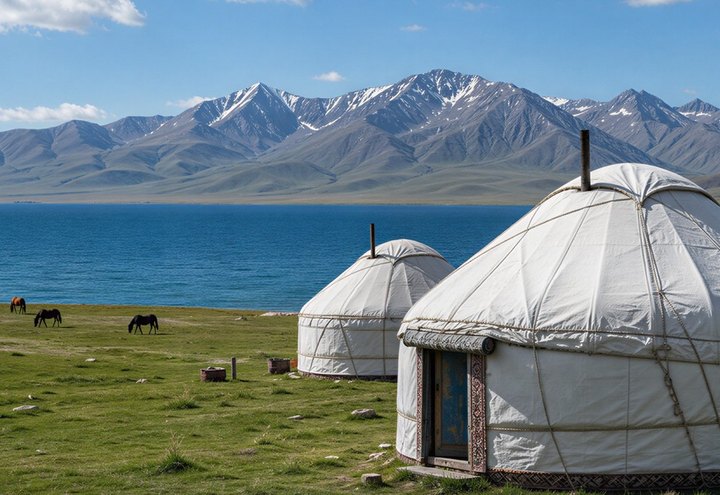
Two weeks is enough for an excellent Central Asia itinerary, but not enough for all five countries. The most balanced first journey links Kazakhstan, Kyrgyzstan and Uzbekistan: begin with Almaty's urban energy and surrounding landscapes, slow down beside Issyk-Kul and Song-Kul, then finish among Uzbekistan's Silk Road cities.
This route assumes travel during the warmer mountain season, broadly from mid-June to September. Song-Kul access is seasonal, international schedules change and border formalities depend on nationality, so treat the sequence as a planning framework and verify every connection before booking.
Route at a glance
Almaty (3 nights) → Bishkek (1 night) → Issyk-Kul or Karakol (2 nights) → Song-Kul (2 nights) → Tashkent (1 night) → Samarkand (2 nights) → Bukhara (2 nights) → departure.
Days 1–2: Almaty, Kazakhstan
Use the first day to recover, explore central Almaty and understand the city rather than leaving immediately on a long excursion. On day two, choose a nearby mountain experience appropriate to current access and weather. Almaty provides the easiest soft landing on the route, with a broad accommodation range and strong food scene.
Day 3: Charyn Canyon and the Kolsai region
Leave early for Charyn National Park, roughly 200 kilometres east of Almaty. Continue towards Saty if combining the canyon with Kolsai or Kaindy. An overnight in the region is more responsible and enjoyable than compressing every landscape into one exhausting return drive. If road or weather conditions are poor, keep a third city day and visit a closer mountain area instead.
Day 4: Travel to Bishkek, Kyrgyzstan
Return towards Almaty and continue to Bishkek using a current scheduled service, private transfer or flight. Border and journey times can change, so avoid attaching a non-refundable activity to the arrival evening. Bishkek is useful for supplies, cash and a relaxed introduction to Kyrgyz food.
Days 5–6: Issyk-Kul and Karakol
Travel around the lake towards Karakol, stopping selectively rather than trying to circle Issyk-Kul in one day. Karakol works well for its historic buildings, food and access to mountain valleys. Strong hikers can plan a guided day or longer route; others can choose Jeti-Oguz, hot springs or a south-shore cultural stay.
Days 7–8: Song-Kul yurt stay
Travel via Kochkor to Song-Kul, normally using a 4WD transfer arranged with a community tourism office or the yurt host. The lake sits at 3,016 metres, so spend two nights if possible: the first for arrival and acclimatisation, the second for walking, horse riding or simply observing life on the summer pasture. Nights can approach freezing even in July.
Song-Kul camps generally operate from mid-June to mid-September. Outside that period, replace these two nights with Bishkek, the lower valleys or a longer Uzbekistan stay. Never pressure a driver to use a mountain road when local advice says conditions are unsafe.
Day 9: Continue to Tashkent
This is the itinerary's main transition day. Depending on current schedules, return towards Bishkek for a flight or use an appropriate overland connection. Do not assume an old direct bus or border route is still operating. Arrive in Tashkent with enough time for dinner and a first look at the metro rather than scheduling a full sightseeing programme.
Days 10–11: Samarkand
Use a current Uzbekistan Railways service from Tashkent to Samarkand. Reserve popular trains in advance when booking becomes available. Two nights allow time for Registan Square, Shah-i-Zinda, Bibi-Khanym Mosque, Siyob Bazaar and a quieter neighbourhood meal without reducing the city to a single photograph.
Days 12–13: Bukhara
Continue by train to Bukhara. Its historic core is compact enough to explore on foot, but the density of monuments, courtyards and craft spaces rewards slow travel. Walk around Poi-Kalon at different times of day, explore the trading domes and leave time for the Ark and areas beyond Lyabi-Hauz.
Day 14: Departure or essential buffer
Depart from Bukhara where a suitable flight exists, or return to Tashkent according to the confirmed international itinerary. Protect the long-haul flight with a buffer whenever separate tickets, mountain roads or borders are involved. If your international departure is early, travel to the gateway on day 13.
How to book this Central Asia route
Book the international arrival and departure first, then the Uzbekistan trains, followed by Song-Kul accommodation and mountain transport. Keep flexible city accommodation until the critical connections are confirmed. Download reservations and insurance details because mobile coverage can be limited in the mountains.
What to pack
Bring light layers for hot Silk Road cities, genuine warm clothing for Song-Kul, sun protection, a refillable bottle with an appropriate purification plan, comfortable shoes and some cash. Travel insurance should cover the actual altitude and activities planned. Respect dress expectations at religious sites and ask before photographing people.
Shorter and longer alternatives
For a gentler two-week trip, remove either Charyn or Karakol and add the night to Samarkand or Bukhara. With three weeks, add Khiva. The Pamir Highway should not be squeezed into this route; it deserves a separate expedition with permits, acclimatisation and contingency days.
Build your shortlist
Compare the 15 best places to visit in Central Asia and choose a memorable night from our guide to Central Asia's yurt camps and mountain stays.
Before booking
Confirm entry rules with the relevant government or embassy for your passport. Check transport with the operating railway, airline or authorised local provider. Mountain conditions and border procedures can change faster than general travel articles.
Information changes
Transport, entry rules, prices, permits and seasonal access can change. Verify critical details with official authorities and operators shortly before travel.