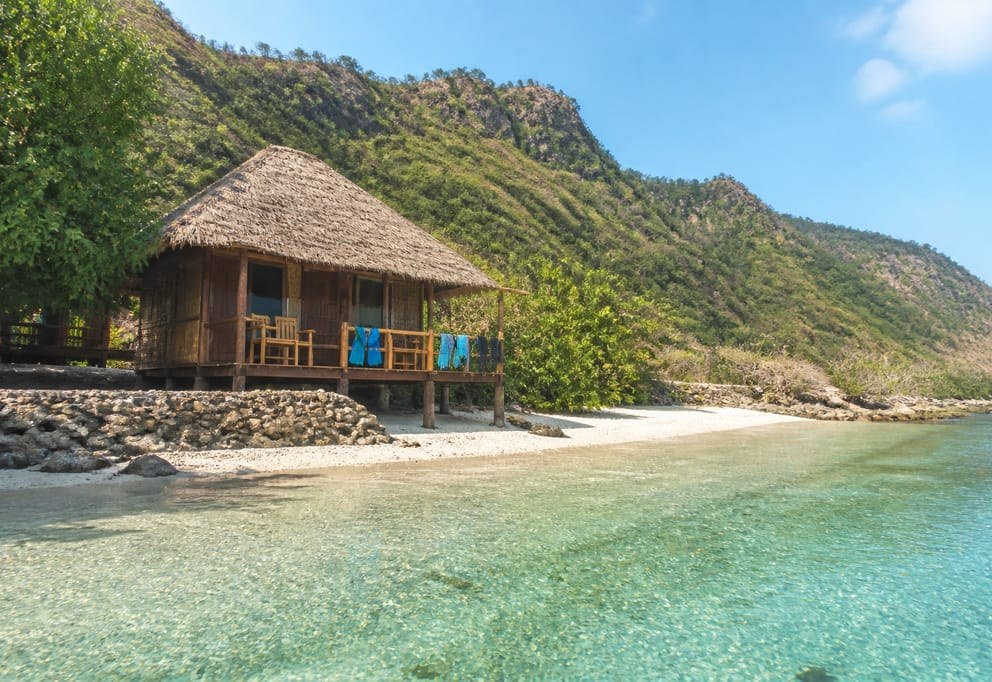
The reef off Atauro's western shore begins close enough that guests swim to it from the beach in front of their rooms. Surveys of these waters have recorded exceptionally high reef-fish diversity, among the highest documented anywhere, and the practical consequence for a visitor is that the snorkelling requires no boat, no guide and no schedule. The island sits about twenty-five kilometres north of Dili, across the Wetar Strait.
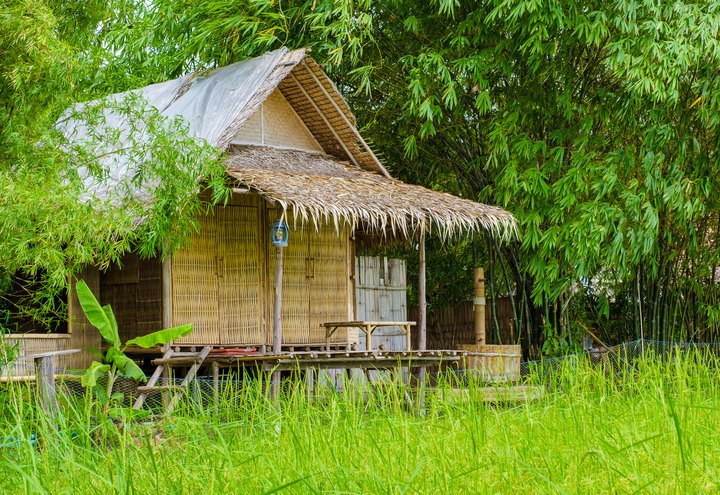
Lodging falls into two broad categories. The first is the eco-bungalow: timber and thatch, built low on the sand, usually with a raised veranda, a mosquito net and a bathroom that runs on a bucket and a tank. Power comes from solar panels and is rationed, typically with lights and a fan in the evening and a charging point in the communal area. The second is the community guesthouse, run by a village association, where accommodation is simpler and the money is distributed through a local committee rather than a single owner. Several of the older operations on the island were set up explicitly on that model, and it remains the norm rather than the exception.
Rates are usually quoted per person rather than per room and normally include three meals, since there is nowhere else to eat. Indicative figures for 2026 run roughly US$35-75 per person per night, with the upper end buying a private bathroom and a sea-facing veranda rather than anything more elaborate. Diving is charged separately and is the main reason most guests come.
What to bring
Cash. There are no ATMs on the island and card payment is not available, so the full cost of a stay plus the return crossing has to arrive with the guest from Dili. Timor-Leste uses the US dollar, and small denominations are considerably more useful than large ones. A torch is worth carrying, as is a dry bag.
Crossings run from Dili by fast boat in a little over an hour, and by the slower vehicle ferry rather less often and rather more cheaply. Sea conditions decide the schedule, and the return leg is the one to leave slack around. Whale and dolphin migration through the Ombai-Wetar Strait runs roughly from October to December, which is also when the water is at its clearest. Anyone planning around that window should be writing to guesthouses several weeks ahead, because the island's total bed count is small and it fills.