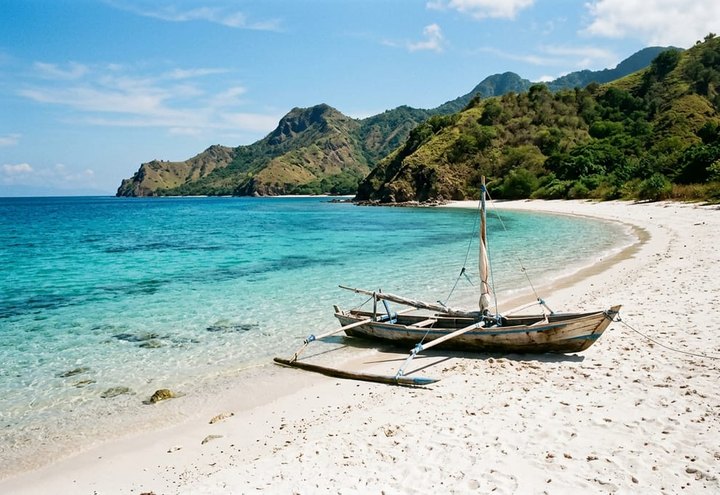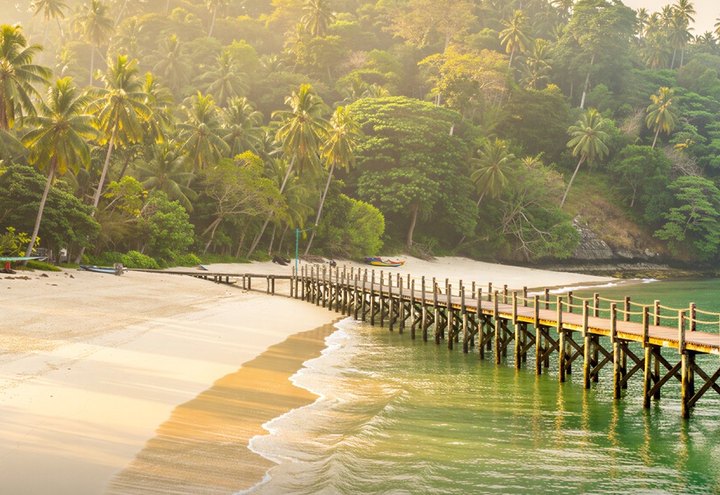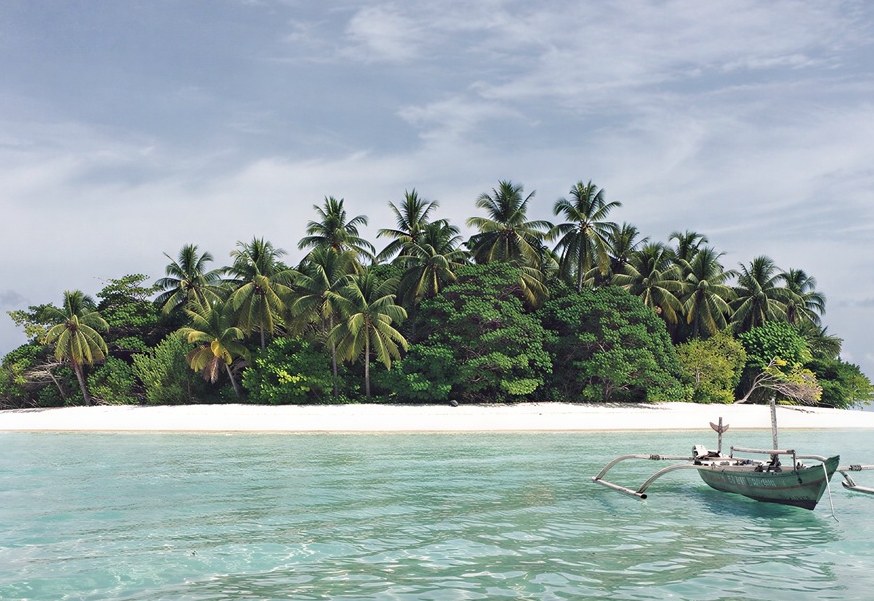
The channel between Tutuala's shore and Jaco Island is a few hundred metres of clear water, shallow enough that the sandbar reads as a pale seam from the beach. Fishermen run visitors across in small outboard boats through the morning and collect them again in the afternoon. Nobody stays. Jaco is uninhabited and locally held to be sacred, and the rule that no one sleeps there is observed without argument, by residents and visitors alike.
Our film is sixty seconds long and consists of a handful of fixed shots. The camera sits on the eastern shore looking across, then on the island's sand looking back, then holds on the water where the two currents meet and the colour changes abruptly from pale green to dark blue. Nothing pans. Nothing rises. The lower third reads JACO ISLAND, TIMOR-LESTE and stays where it is put.
What the frame catches, mostly, is time passing: the shadow of a boat drifting across sand, a wave arriving and clearing, the slow change in surface texture when the wind turns. A minute is long enough to feel the pace of the place and short enough to be honest about how little happens there, which is the appeal. Cutting it longer would have meant inventing incident, and there is none to invent.
Getting there and back
Jaco sits at the far eastern tip of Timor-Leste, inside Nino Konis Santana National Park, reached by a long drive east from Dili and then a rough descent to the beach below Tutuala. The crossing is arranged on the beach with the boatmen who work it. Bring water, shade and food, because there is nothing on the island and no shop on the shore, and take everything back out with you. Fares are settled directly with the boatman, in cash, in US dollars; indicative 2026 rates for a return crossing sit in the low tens of dollars per boat rather than per person.
The dry months, roughly May to November, give the calmest crossings and the clearest water. Snorkelling from the beach is good in settled conditions, though there is no supervision and no boat traffic control, so conservative judgement matters more than usual here.
Go early. The light before nine is better, the sea is flatter, and the boats come back for you on the same tide.