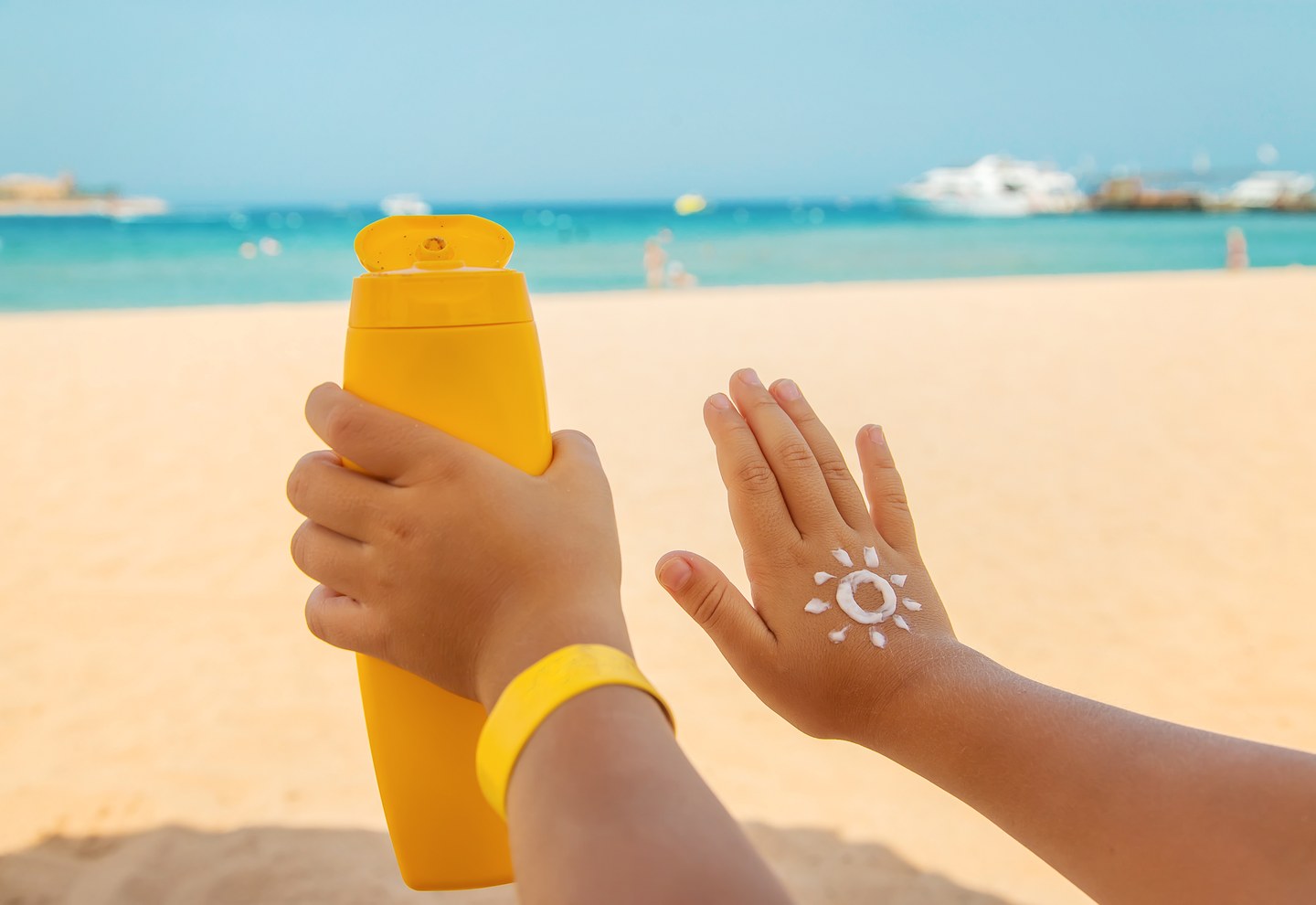
No authority anywhere certifies the words “reef safe”. The phrase carries no legal definition, no testing requirement and no agreed standard, which means it can appear on a bottle whose contents have never been assessed against anything. The ingredient list on the back is the only part of the packaging that tells you something.
The two names to look for and avoid are oxybenzone and octinoxate, UV filters that laboratory work has associated with harm to coral, including bleaching and damage to developing coral larvae. Several jurisdictions with reef economies, among them Palau and Hawaii, have restricted their sale on that basis. Reef scientists are generally clear that sunscreen is a smaller pressure on coral than warming seas, sedimentation from land clearing and destructive fishing, but that a diver in the water on a busy reef contributes a load that is easy to remove.
The alternative is a mineral filter: zinc oxide, or titanium dioxide, which sit on the skin and reflect rather than absorbing. Look for non-nano zinc oxide, meaning particles above roughly 100 nanometres, which are too large to be readily ingested by coral polyps. The trade-off is honest and visible: mineral formulations leave a white cast, and the tinted versions that reduce it are working around the same physics. Higher zinc percentages mean better coverage and a heavier film.
Formulation matters as much as filter. Sprays put a large share of the product into the air and onto the sand rather than onto skin. Thick creams and sticks stay where they are put, which is the point. Reef-conscious lists often also flag certain preservatives and microplastic exfoliants, so a short ingredient list is a reasonable proxy for a considered one.
What actually reduces the load
Cover skin instead of coating it. A long-sleeved rash vest with a UV rating removes most of the area that needs sunscreen at all, leaves only face, hands and feet to be covered, and does not wash off. Apply what remains twenty to thirty minutes before entering the water so it has bonded, rather than on the boat as the anchor drops. And keep fins clear of the reef itself, since a single careless kick breaks more coral than a season of sunscreen.
Stock in Dili is limited and mineral formulations are not reliably available, so bring what you need for a trip to Atauro rather than assuming you can buy it on arrival. Expect to pay roughly US$15 to US$35 for a bottle at home (indicative, 2026), and expect to use more of it than you planned.