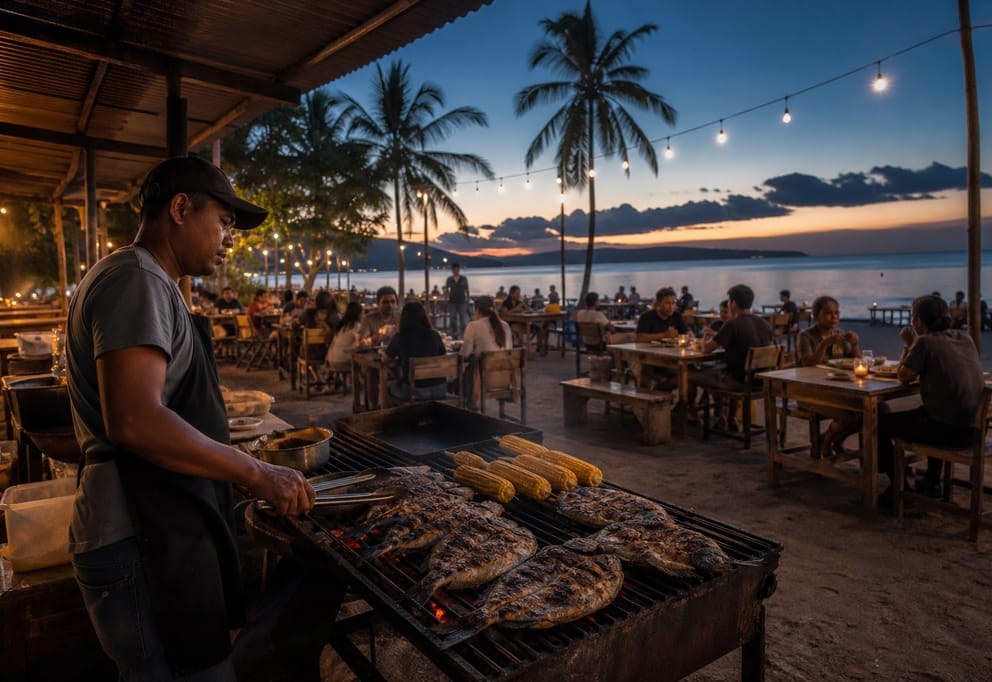
By six in the evening the charcoal is lit along the Dili seafront and the fish are laid out whole on trays - mackerel, snapper, small tuna - priced by size rather than by menu. You point, it goes on the grill, and it comes back twenty minutes later with rice, lime and a bowl of chilli that should be treated with respect. The tables face the water. Nothing about the process is fast, and nobody appears to want it to be.
Timorese cooking runs on two long threads and one local spine. The Portuguese thread shows in bread, in salt cod at feast days, in slow stews and in a national attachment to strong coffee. The Indonesian thread, closer in time, brought fried rice and noodles, sambal, tempeh and the meatball-soup trade that feeds Dili late. Underneath both sits what people actually cook at home: corn, cassava, taro, mung beans, pumpkin and whatever the sea gave up that morning.
Two dishes are worth ordering by name. Ikan sabuko is fish, often mackerel, cooked with tamarind and basil - sour, green-tasting, and best against plain rice. Batar daan is the kitchen staple: corn simmered with mung beans and pumpkin until it thickens into something plain in the good sense, and far better on a cool evening than it sounds at midday. Neither is restaurant food in origin, and both are better where the cooking is domestic.
Markets set the rhythm the rest of the day follows. Produce comes down from the hills early, and by mid-morning the stalls carry bananas, papaya, chillies, bundled greens and small mounds of dried fish. Bread rolls sell out first. Lunch tends to be brief; the evening is where the eating happens.
Up into the hills
The road climbs quickly out of Dili, and within half an hour the air is cooler and the view runs back down over the harbour. Small roadside places serve coffee grown in Ermera, the country's main coffee district, where arabica is picked by hand on smallholdings and much of the crop leaves for export. Locally it is drunk black and unfussed with, and it is the one Timorese product most visitors can take home without ceremony. Buy it roasted and whole rather than ground, and buy it in town rather than at the airport.
Indicative costs in 2026: a street plate runs around US$2-5, a grilled fish dinner on the seafront around US$10-25 a head. Cash, in US dollars, remains the safe assumption. Come hungry in the early evening, when the grills are lit and the choosing is still good.